
Therapy for life’s in-between spaces
Spiritually-integrated therapy for grief and loss, complex trauma, and living between cultures.

© "Seeker" · Artwork by Fikri Amanda Abubakar · Used under licenseAnxiety
A part of you scanning the future, determined you’ll never be caught unprepared again.
It often speaks in “what ifs”: What if I say the wrong thing? What if something happens to them? What if I can't handle it? You might notice a tight chest or stomach, trouble sleeping, and a pull to over-plan, seek reassurance, or avoid anything uncertain.
Getting to Know the Parts That Got You This Far
Self-Criticism & Perfectionism
A part that believes if it's hard on you first, no one else can hurt you, and if everything is perfect, nothing can fall apart.
You might notice a harsh inner voice, impossible standards, trouble accepting care, and never feeling finished or good enough.
Numbness & Dissociation
A part that turned the volume down when feelings grew too big to bear alone.
You might notice feeling flat or far away, watching your life from a distance, going through the motions, or slipping into your head to avoid your heart.
Hypervigilance
A part of you still on guard, as if the danger never ended.
You might jump at small sounds, watch faces closely for signs of trouble, keep your body tense, or struggle to relax even when nothing is wrong.
Shame & Worthlessness
A young part carrying beliefs it took on in moments when no one was there to help: "I'm too much," "I'm not enough," "It was my fault."
You might notice heat in your face, wanting to hide or disappear, apologizing for existing, and a quiet certainty that you are the problem.
Escape
A part that rushes in to put out the fire when pain breaks through, reaching for relief as fast as it can.
You might notice bingeing, doomscrolling, drinking, or overworking, followed by regret, and then the cycle starting again. In a world built to sell us quick relief, these parts never run out of things to reach for.

The things you’ve been struggling with aren’t signs that something is wrong with you.
They’re parts of you that have been working so hard, for so long, to keep you safe, often with no one there to help them.
They deserve to be met with kindness, and so do you.
Elsie Zhang
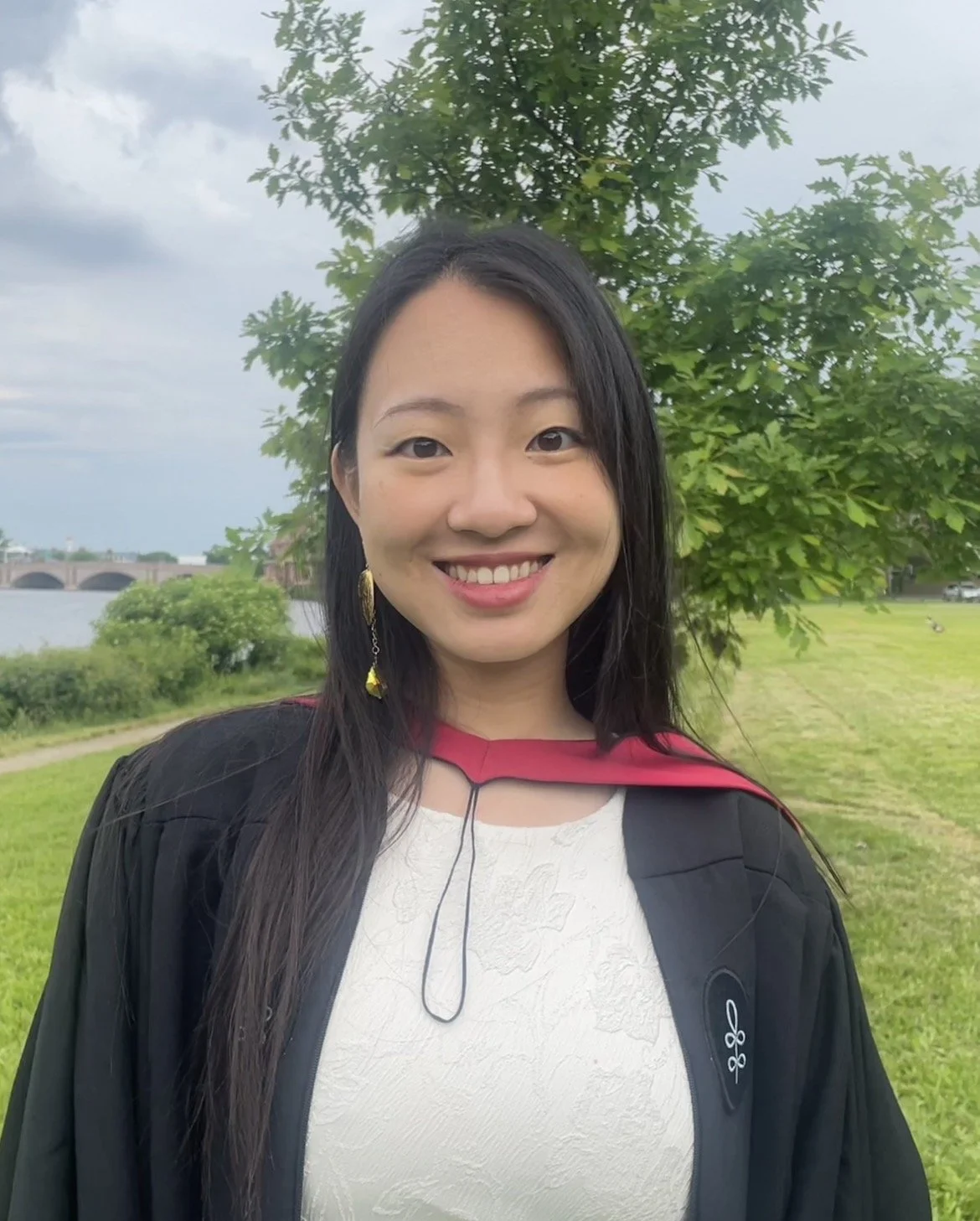
Registered Psychotherapist (Qualifying), MPS, MEd, CPC
Education
MPS, Psychotherapy and Spiritual Care, Emmanuel College, University of Toronto
MEd, Human Development and Psychology, Harvard University
Clinical Training in Spiritually Integrated Psychotherapy
Centre for Addiction and Mental Health (CAMH): inpatient crisis and critical care; outpatient Bridging Clinic and Spiritual Care
Mount Sinai Hospital: inpatient antenatal/postpartum, surgical, and intensive care units
My Approach Draws On:
Parts work informed by Internal Family Systems (IFS) and Trauma-Informed Stabilization Treatment (TIST)
Acceptance and Commitment Therapy (ACT)
Narrative therapy
Emotion-focused therapy (EFT)
Psychodynamic Therapy
Grief, Bereavement, and End-of-Life Care
Contemplative practice and mindfulness
Expressive arts approaches
I specialize in…
Grief, bereavement, and loss, including loss through serious life-limiting illness and disability, suicide loss, pregnancy and newborn loss, and pet loss
Adverse early experiences and intergenerational trauma
Perfectionism and harsh inner critic
Recovery from narcissistic and emotional abuse
Immigration and cultural adjustment
Frequently Asked Questions
-
The free 20-minute consultation is a chance for us to meet and see whether we’re a good fit. You can share a little about what’s bringing you to therapy and what you hope might change, and ask me anything about how I work.
There’s no pressure to share more than feels comfortable, and no obligation to book afterward.
-
Yes. All sessions take place online through a secure video platform, so you can meet with me from home or anywhere that feels private.
Many people find it easier to open up in a space that already feels familiar. Feel free to wrap up in your favourite blanket, or bring a stuffed animal or a stress ball. Whatever helps you feel at ease is welcome here.
-
Sessions are either 50 or 75 minutes, depending on what you need. Many people find that 50 minutes works well for regular sessions. The 75-minute option offers more room to settle in and go deeper, which can be helpful for grief, trauma work, or times when there’s a lot to hold. We can talk about which feels right for you during your consultation.
-
Individual sessions : $170 (50-minute) and $240 (75-minute).
Couples and family sessions: $200 (50-minute) and $270 (75-minute).
A limited number of reduced-fee spots are available for whom cost is a barrier. Feel free to inquire during your consultation.
-
My service is covered by most extended health plans. You will receive a receipt you could submit to your insurance provider for reimbursement. Most plans let you do this online.
I’m not able to confirm your coverage myself, since only your insurance provider can do that, so please check with them before we begin to make sure you’re covered.
You might ask your provider:
How much coverage do I have per year?
Does my plan cover a Registered Psychotherapist (Qualifying)?
Is there a maximum amount covered per session?
-
Most people start with weekly sessions.
Meeting regularly at the beginning helps us build trust and gives your parts time to feel safe enough to open up. As things begin to settle, we can meet less often. We’ll decide together what feels right for your needs, your schedule, and your budget, and we can adjust along the way.
-
It depends on what you’re carrying and what you hope for. Some people come for a few months to move through a specific difficulty. Others stay longer to work with deeper patterns or long-held grief. We’ll check in regularly about how things are going, and you’re always welcome to pause or stop.
Let’s Work Together.
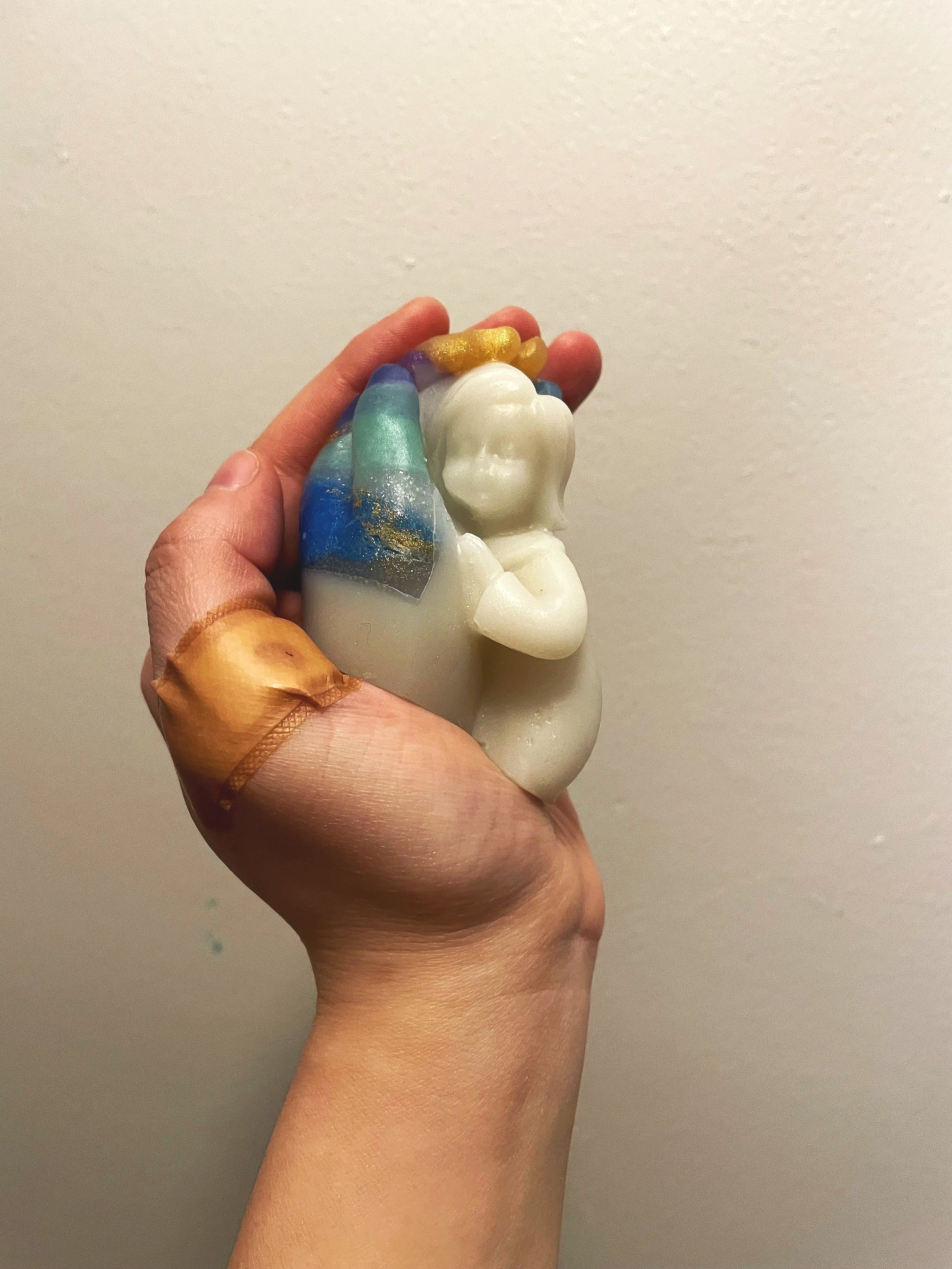
The Unbroken
There is a brokenness
out of which comes the unbroken,
a shatteredness
out of which blooms the unshatterable.
There is a sorrow
beyond all grief which leads to joy
and a fragility
out of whose depths emerges strength.
There is a hollow space
too vast for words
through which we pass with each loss,
out of whose darkness we are sanctioned into being.
There is a cry deeper than all sound
whose serrated edges cut the heart
as we break open to the place inside
which is unbreakable and whole,
while learning to sing.
Rashani Réa, 1991